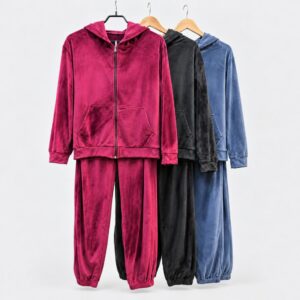
For a women’s matching-set sample, approve the top size and trouser size as an explicit pair. A shared label such as medium does not tell a buyer whether both garments follow the intended measurement chart or whether mixed-size combinations are available. Tianhong Pants lists women’s knit matching sets in its product categories. Use that category as a sourcing reference, then request the actual style, component charts and pairing rule for the version the supplier proposes to quote.
Give each garment its own measurement reference
Start with separate measurement sheets for the top and trousers, even when both garments will carry one retail size label. Identify the measurement points, units and method on each sheet. For the top, choose the points relevant to your brief rather than copying an unrelated chart. Do the same for the trousers. Ask the supplier to complete or confirm those fields for its offered style. A catalogue photograph can help identify the general garment combination, but it cannot provide the measurements needed to approve your requested size pairing.
Next, define what one paired size means in your assortment. It may mean a top and trousers carrying the same supplier label, or a buyer-defined combination of two component sizes. State your requested rule and ask whether it can be supplied. Do not assume the supplier offers mixed sizing or that differently named labels are equivalent. If the supplier proposes its existing standard pairing, ask for the actual component measurements and compare them with your intended retail size guidance before selecting the sample.
Select a sample that tests the pairing decision
Give the proposed sample pair a reference that identifies both components. A label such as Sample B should be accompanied by a top reference, trouser reference and their respective size labels. Ask the supplier to mark photographs and measurement records with that same pair reference. This makes it possible to see whether comments concern the top, the trousers or the relationship between them. It also prevents an attractive photograph of one combination from being mistaken for approval of a different size pairing proposed later in the conversation.
Review the two garments separately before evaluating the combination. Record which requested measurements match your brief and which need clarification. Then assess whether the proposed pair is appropriate for your assortment using your own fit-review process. Avoid turning a sample observation into a universal fit or comfort claim. Fibre composition, stretch behaviour, washing changes and other performance information require separate supplier confirmation and evidence. Neither a category label containing knit nor a photograph establishes those details for a particular offered style.
A sample-pairing control table
Control field | What to identify | Question for the supplier
Style reference | Named top and trouser versions | Are these the exact quoted components?
Top size | Label and measurement-sheet revision | Which measurements define this label?
Trouser size | Label and measurement-sheet revision | Which measurements define this label?
Pairing rule | Fixed pair or requested mixed sizes | Which combinations can be quoted?
Sample identity | One reference linking both garments | How will each component be marked?
Order assortment | Quantity by approved paired reference | How will pair changes be disclosed?
Use the table to separate three different decisions: which style is selected, which size each garment uses and which combinations form the final assortment. For example, an importer serving UK retailers and an importer serving continental European retailers may present different retail labels. That does not make their component measurement requirements identical. Send the requested measurements and pairing matrix rather than relying on market names alone. Ask the supplier to identify any proposed substitution clearly so your team can review its effect on both components.
Carry the approved pairing into the order
Once the sample pair is accepted, include the two component references and chart revisions in the purchase specification. Request quantities by paired reference, not only by a total number of sets. If the top changes while the trousers stay the same, record a new pairing revision rather than assuming the previous sample approval covers the change. Ask how the supplier proposes to identify paired garments during packing, especially if the two components are packed separately before being combined for your retail presentation.
For repeat orders, send the approved pairing matrix and ask whether the component versions and measurements remain unchanged. If the supplier proposes another style, size system or packing approach, request an updated sample proposal. Keep commercial questions connected to the defined pair: pricing, minimum quantities, timing and availability should be confirmed for that combination. The presence of a category image on the website is a useful enquiry starting point, but it is not a commitment that every pictured colour, size pairing or construction is currently offered.
FAQ
Is one set size label enough for sample approval?
Use the label together with separate top and trouser measurement references. The label identifies a size name; the measurement sheets explain what that name means for each component in the offered version. Ask the supplier to confirm the link between them.
Can the top and trousers use different sizes?
Treat mixed sizing as a request to confirm, rather than an assumed service. Provide the combinations you want and ask whether they can be quoted, sampled and identified in packing. Keep any supplier-proposed fixed pairing visible as a different option.
Does approving the sample establish fit for everyone?
No. Sample approval should record the specific version, measurements and observations your team accepted. It does not justify a universal fit, comfort or performance statement. Prepare retail guidance from verified product information and the review appropriate to your market.
What should change when one component is revised?
Update its component reference and the linked pair revision. Ask whether new measurements or another sample are needed, then confirm the revised quantities and packing identity. Keeping that relationship explicit prevents an earlier sample from being used to describe a different combination.
Product reference and enquiries
Product category reference: https://tianhongpants.com/products/?product_filter=%e9%92%88%e7%bb%87%e5%a5%b3%e5%a5%97%e8%a3%85
Catalogue source: https://tianhongpants.com/products/
Contact Tianhong Pants: https://tianhongpants.com/contact/
More buyer articles: https://tianhongpants.com/blog/